Facial massage vs injectables: what hands can really do
Facial massage vs injectables: what your hands genuinely change, what they never will, and how to answer that question without talking down aesthetic medicine.
By Déborah · September 11, 2026
"Honestly, I'm starting to wonder whether I should just get something done." She's still on the bed, the treatment is finished, she's looking at herself in the mirror I've just handed her. I've been hearing that sentence for fifteen years, and for a long time it made me uncomfortable — because all I had to offer back was a defence.
The question your clients are already asking
They don't always put it that plainly. It arrives sideways: "a friend of mine had her forehead done, you can barely tell", "what age do people usually start, in your opinion?", or simply a long silence in front of the mirror. But the question is in almost every treatment room, several times a month.
What cost me most was how I answered it at the beginning: a little tense, a little preachy, with the implication that going natural is somehow the nobler choice. That convinces nobody, and it files your work under the consolation prize for women who aren't brave enough.
The truth is far more interesting, and it sells far better: massage and injectables aren't aiming at the same thing. Until you can say precisely what that difference is, you'll be defending your craft with mood rather than with anatomy.
Facial massage vs injectables: two tools, two targets
Asking about facial massage vs injectables is a bit like asking whether you'd rather have physiotherapy or a pair of glasses. Both act on the face; neither touches the same structure.
Botulinum toxin acts on the nerve signal to a muscle: it stops the contraction, and with it the expression line that contraction digs. A hyaluronic acid filler acts on volume: it supports and replaces where tissue has gone. Both are medical procedures, with a practitioner, a prescription and a risk profile.
Your hands work on three other planes: circulation (blood and lymph), muscular tone (releasing what pulls, waking what has gone quiet) and the state of the tissue (mobility, density, adhesions). Plus a fourth that nobody puts on the price list and that governs all the others: the nervous system of the person lying in front of you.
An injection changes a structure. A massage changes a state. They aren't two strengths of the same thing — they're two different logics.
Once that split is clear in your own head, the conversation with your client becomes simple. And honest.
What hands genuinely do
Here's what I can defend, session after session, because I can see it and because she can feel it.
Move circulation and clear stagnation
The fastest and most visible effect. A congested face in the morning, puffiness, a grey flat tone: one well-delivered session of facial lymphatic drainage changes that within the hour. The result is real, visible to the naked eye, and it holds for a few days — longer when she comes back regularly.
No injection does that. Some temporarily do the opposite, with post-procedure swelling.
Release the tension that drags a face down
The most underrated part of the job. A locked masseter widens the jawline and compresses it. Temporalis muscles hard as wood freeze the whole upper face. A permanently tight neck holds all of it downwards. There, your hands do work no syringe replaces, because the problem is neither missing volume nor an overactive muscle to switch off: it's a muscle that has forgotten how to let go.
I have clients whose jawline visibly lifts in a single session, purely from jaw release. That isn't magic, it's anatomy.
Improve tissue quality
Does the skin glide over the deeper planes, or is it stuck down? Is the tissue supple or board-like? Regular manual work improves that mobility, improves local vascularisation, and with it the look of the skin's texture. It's slow, it's cumulative, and it doesn't sell as a one-off — which is exactly why so many therapists never mention it.
Bring the nervous system down
This is the widest gap between the two worlds. An hour of slow contact tips a client into a parasympathetic state: the breath drops, the jaw releases, the complexion changes in front of you. Facial tension is very largely the local translation of a whole-body state of alert. I've unpacked the mechanism in the article on nervous system facial massage, and it's probably the most valuable thing we have to offer.
Nobody has ever left an injectables clinic having had a sleep.
What massage will never do — and you need to say so
This is the part therapists dodge, and it's precisely the part that makes you credible.
Your hands will not fill a nasolabial fold carved out by real loss of bone and fat. They will not erase a frown line built over twenty years of contraction. They will not lift structural ptosis, and they obviously replace neither a facelift nor any medical procedure. If your client is expecting that, no protocol will keep the promise — and you're the one who'll carry the disappointment.
The benefits of facial massage are real, cumulative and reversible. Real: she can see them. Cumulative: they build with regularity. Reversible: stop for six months and the ground goes back to what it was. Saying those three words out loud wins you more clients than any retouched before-and-after.
What injectables don't do either
The reverse deserves saying too, without campaigning.
An injection drains nothing, doesn't release a clenched jaw, doesn't make stuck tissue mobile, doesn't bring a breath down. Nor does it give many clients the thing they came for without ever putting it into words: an hour in which somebody looks after them, quietly, with nothing expected in return.
And there's a whole category of client you shouldn't let walk past: the ones who don't want a needle. Not on principle — out of fear, out of sensitivity, because they've seen a result they didn't like, or simply because the idea of freezing their face doesn't appeal. Those women are actively looking for a natural alternative to injectables, and they usually have the budget. They just need to find a professional who can explain what she actually does.
The client who's already had work: what you can do, and when
There are more of them every year, and the question comes up in every course I teach. Three simple rules I follow in the treatment room.
Always ask. It belongs in the consultation, exactly like allergies: "have you had any injectable treatments recently, and where?" Plenty of clients won't volunteer it. Ask with no judgement in your voice, or you won't get a straight answer.
Respect a delay. Common professional guidance is to wait at least two weeks after an injectable treatment before any manual work on that area. If you're in any doubt, or she can't remember dates, send her back to her practitioner: they know the product used and their own aftercare rules. That isn't an admission of weakness, it's the only defensible position.
Adapt the area, not the whole treatment. A client treated on the forehead is still entirely massable on the neck, scalp, trapezius, jaw and décolleté. On the areas a practitioner has worked: no sustained pressure, no deep mobilisation, no heat. You still give an excellent treatment — you just build it differently.
How to answer without running medicine down
Running aesthetic medicine down is a self-inflicted wound: a good share of your clientele has already been, and they'll hear a judgement about themselves.
What I say, more or less word for word: "They don't work in the same place. An injection acts on a volume or on one specific muscle. I work on circulation, on tension, and on the quality of your tissue — it isn't competing, it's complementary. From what I'm seeing on you today, there's a lot of tension and a lot of stagnation, and that's exactly my ground. If one day you want a hollow filled, that'll be somebody else's ground, and it won't undo what we do here."
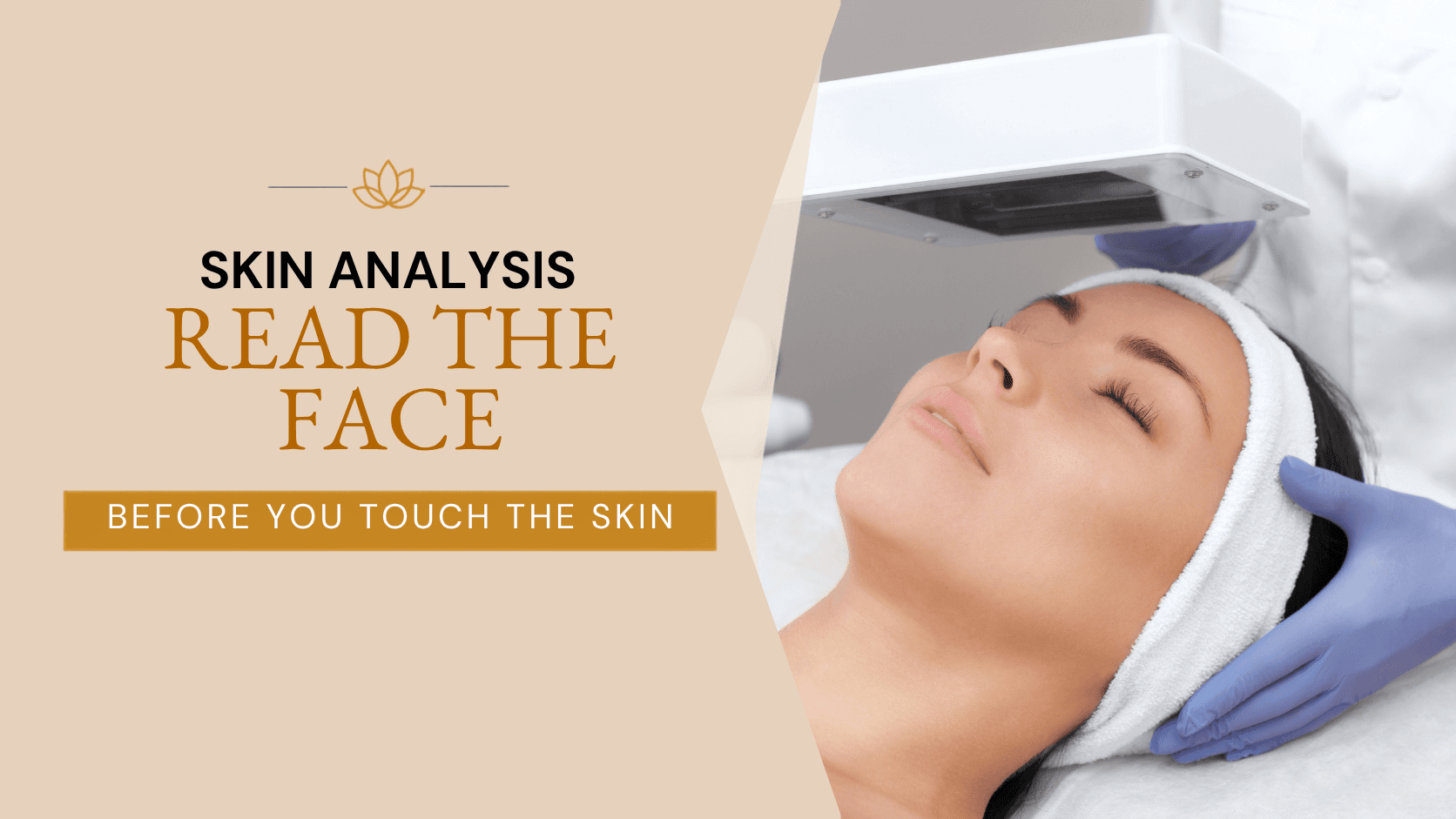
Three things happen in that answer. You name your target instead of defending yourself, you validate her right to choose differently, and you bring the conversation back to her own face — always better than a general speech, and the whole point of a proper skin analysis at the start of the session.
One thing never to do: recommend or advise against a medical procedure. It isn't your job and it exposes you for nothing. "That's outside my scope, your doctor will be able to tell you" is a complete sentence, and it costs you no credibility at all.
Building an offer that holds up against aesthetic medicine
The real question behind facial massage vs injectables isn't technical, it's commercial: how do you justify a premium price for manual work when she's comparing it to a procedure that promises a result in ten minutes?
Three levers work for the therapists I train.
Sell the course, not the session. Because the benefits are cumulative, a single session will always lose that comparison. A course of six close-together sessions, with a review point and photographs, changes the balance completely.
Document it. A photo in neutral light at session one, session three and session six — same spot, same framing every time. What doesn't get measured seems not to exist, and your client forgets her own starting point within three weeks.
Position yourself on what the other one doesn't do. Drainage, the jaw, the neck, the breath, the time. That's the ground where nobody compares you any more, and it's exactly what a well-built signature treatment is for.
Facial massage vs injectables in the ORA Restore & Reconnect method
After fifteen years in the treatment room — Kobido, lymphatic drainage, deep tissue, sculpting, and the yoga that eventually tied it all together — I stopped thinking of my work as an alternative to anything. An alternative is always second. Solid ground doesn't need to be.
The ORA Restore & Reconnect method runs in four movements: observe before you touch, regulate the nervous system through contact and breath, read the tension and what it's telling you, then massage, building the treatment from what you found. None of those four competes with a syringe. All four are out of reach of a ten-minute procedure.
That shift is what I teach: stop comparing your result to an injector's, and start naming the thing only you know how to do.
FAQ — Facial massage vs injectables
Can facial massage replace injectables? No, and promising it would put you in a difficult position. It acts neither on volume nor on the nerve signal to a muscle. It does act on circulation, muscular tension, tissue mobility and nervous state — four things no injection treats. Plenty of women postpone the idea of injectables thanks to regular manual work, but it isn't the same procedure and it isn't the same promise.
Can you massage a client who has had injectables? Yes, leaving at least two weeks after treatment on the area concerned, and avoiding sustained pressure, deep mobilisation and heat on that area. If you're unsure about the product or the date, refer her back to her injector. The rest of the face, the neck and the décolleté stay entirely available to you.
What do you say to a client who's torn between the two? Describe the targets instead of comparing results, validate her right to choose, and bring it back to what you observed on her face. Never recommend a medical procedure and never argue against one either — refer her to a doctor.
How many sessions before she sees a real result? The circulatory effect is immediate, from the first session. Work on tension and tissue quality needs regularity: plan a course of five or six close-together sessions, then monthly maintenance. Regularity is what you should be selling, not the one-off.
Does talking about aesthetic medicine scare clients off? It's the opposite. A professional who can calmly explain what each approach does, without running the other down, inspires confidence. The only thing that scares clients off is being judged — because one in three of them has already been.
Going further
If you want to know exactly what to do with your hands in front of a locked jaw or a congested face — and be able to explain it to your client without hesitating — that's the whole point of the ORA Restore & Reconnect training.
To start building that position today, get Part 01 of the ebook "The Art of Being an Esthetician" free: it contains 8 practical exercises on your real value and your positioning. On the practical side, see how to regulate the nervous system before you massage, how to read a face before you start, and the 6 most common facial massage mistakes.